Academic writing is changing fast with AI, digital research tools, automated citations, and smarter learning platforms. Here is what every student should understand in 2026.
Introduction
Academic writing in 2026 has moved far beyond traditional essays written in isolation. What was once a simple process of research, drafting, and revision has become a dynamic, technology-enabled workflow powered by AI in education and digital learning tools.
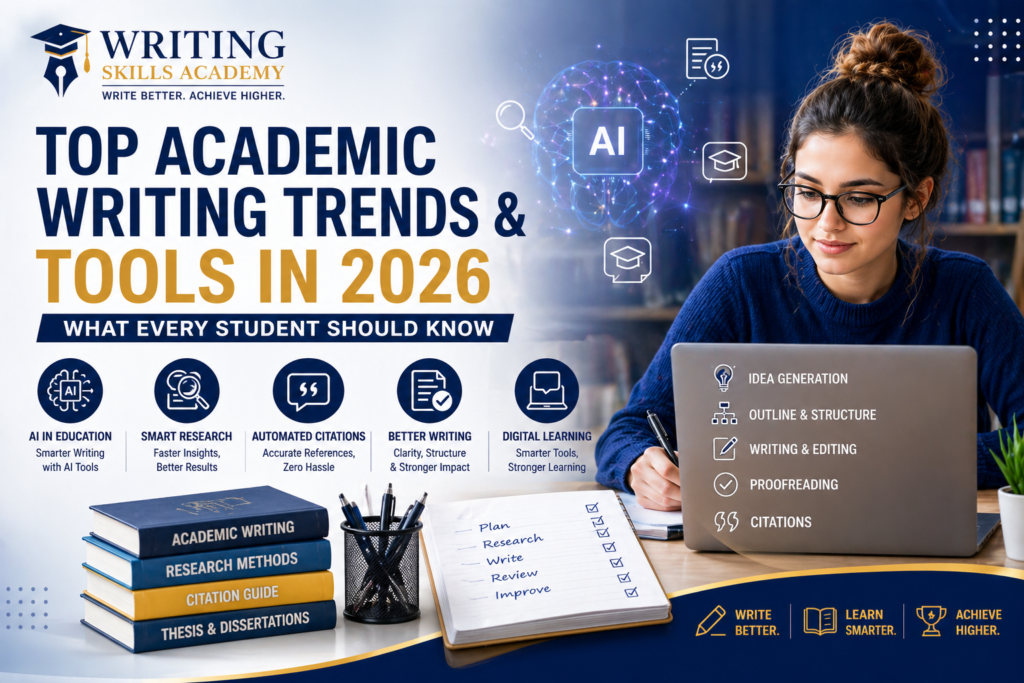
Students now use intelligent platforms for idea generation, structure, grammar, proofreading, citations, and research organization. This reflects the wider academic writing trends of 2026, where efficiency and accuracy are important, but critical thinking remains essential.
AI tools can help students save time, but they do not replace strong writing skills. Instead, students must learn how to work with AI responsibly while maintaining originality, academic quality, and their own voice.
1. Why Students Must Adapt to New Writing Technologies
Adapting to new writing technologies is no longer optional. With the rise of AI writing assistants and digital learning tools, students who ignore these innovations may fall behind academically.
These tools help automate repetitive tasks such as proofreading, citation formatting, and research organization. They also provide instant feedback and personalized suggestions, allowing students to improve their writing faster.
Key Challenges Facing Modern Students
Modern students face information overload, academic integrity concerns, and confusion around university AI policies. While there are endless digital resources available, identifying credible and relevant sources can be difficult.
Students must also avoid over-reliance on AI. Technology should support learning, not replace independent thinking. Success now requires digital literacy, source evaluation, and responsible use of writing tools.
2. The Current Landscape of Academic Writing

How AI is Transforming Academic Writing
Artificial intelligence is now central to academic writing. AI tools can generate outlines, suggest arguments, improve grammar, summarize research papers, and provide real-time feedback.
This has made writing faster and more organized. Students can focus more on analysis, argumentation, and critical thinking while AI handles repetitive editing and formatting tasks.
Rise of Digital Research and Information Overload
Digital databases, online journals, and open-access resources have made research more accessible than ever. However, students must filter huge amounts of information to find credible and useful sources.
Research tools, reference managers, and note-taking apps help students organize information and avoid confusion. Still, strong judgment is needed to separate reliable academic sources from weak or misleading information.
Shift from Manual Writing to AI-Assisted Workflows
One major change in 2026 is the shift from fully manual writing to AI-assisted workflows. Students now combine research tools, AI assistants, editing platforms, and citation managers into one writing process.
This makes academic writing more efficient, but students must know how to select the right tools and use them ethically.
3. Top Academic Writing Trends in 2026

3.1 AI-Assisted Writing Becomes Standard
AI-assisted writing is now a common part of student life. Students use AI tools for brainstorming, outlining, drafting, editing, and improving structure.
3.2 Emphasis on Academic Integrity and AI Detection
Universities are placing stronger focus on academic integrity. AI detection tools, plagiarism checks, and stricter policies are becoming more common. Students must use AI transparently and responsibly.
3.3 Smart Research and Automated Citations
AI-powered research platforms can recommend sources, summarize articles, and generate citations in formats such as APA, MLA, and Harvard. However, students should always verify citation accuracy.
3.4 Personalized Learning and Adaptive Writing Tools
Adaptive writing tools analyze a student’s writing style and provide tailored feedback. This helps improve grammar, clarity, structure, and academic tone.
3.5 Multi-Tool Writing Workflows
Students increasingly use multiple tools together, such as note-taking apps, citation managers, writing assistants, and grammar checkers. A clear workflow helps improve productivity and quality.
4. Must-Know Academic Writing Tools in 2026

4.1 AI Writing Assistants
AI writing assistants such as ChatGPT, Grammarly, and Jasper AI help students brainstorm ideas, draft essays, summarize research, and improve clarity.
These tools save time and improve writing quality, but students must carefully review AI-generated content to maintain originality and accuracy.
4.2 Research and Reference Management Tools
Zotero, Mendeley, and EndNote help students organize sources, generate citations, and manage bibliographies. These tools are especially useful for essays, dissertations, and research projects.
4.3 Grammar, Editing and Proofreading Tools
Tools like Grammarly and ProWritingAid help improve grammar, tone, clarity, vocabulary, and academic style. They are useful for both native and non-native English speakers.
4.4 All-in-One Academic Writing Platforms
Platforms like Notion and Scrivener combine writing, planning, note-taking, and organization features. They help students keep their research and drafts in one place.
4.5 Visualization and Research Mapping Tools
Tools such as Connected Papers and MindMeister help students visually understand connections between research topics, studies, and ideas. They are especially helpful for literature reviews.
5. How Students Are Using Writing Tools

Step-by-Step Academic Writing Process
The modern academic writing process usually follows this workflow:
ResearchOutlineDraftEditCite
Students may begin with Google Scholar for research, organize sources in Zotero, create outlines in Notion, draft with ChatGPT, edit with Grammarly, and finalize citations through Zotero.
Common Mistakes Students Make
- Depending too much on AI-generated content.
- Not checking citations for accuracy.
- Using too many tools without a clear workflow.
- Losing their own voice in academic writing.
- Ignoring university rules about AI usage.
6. Benefits of Using Academic Writing Tools

Academic writing tools offer many advantages for students in 2026. One of the biggest benefits is time-saving. Automated proofreading, formatting, and citation generation allow students to complete assignments faster.
These tools also improve structure and clarity. AI writing assistants and grammar tools help students present ideas in a professional and organized way.
Reference management tools improve citation accuracy and reduce the risk of plagiarism. They also help students stay organized during large research projects.
Main Benefit: Academic writing tools help students save time, reduce stress, improve clarity, and produce better-quality academic work when used responsibly.
7. Risks and Challenges of AI in Academic Writing

AI tools are powerful, but they also bring risks. One major concern is over-reliance. If students depend fully on AI, they may lose critical thinking and independent writing skills.
Another risk is inaccurate citations. AI-generated references may include wrong details, missing information, or even non-existent sources. Students should always verify every source.
Ethical concerns are also important. Submitting fully AI-generated work can violate academic integrity policies. AI should assist the student, not replace the student’s own effort.
8. Best Practices for Using Academic Writing Tools

- Use AI as a support tool, not as a replacement for your own thinking.
- Always verify sources, citations, facts, and references.
- Keep your own academic voice and personal understanding in the writing.
- Follow your university’s AI and plagiarism policies.
- Use only the tools that support your workflow instead of using too many platforms.
Responsible use of academic writing tools helps students get the benefits of technology while avoiding plagiarism, weak arguments, and generic writing.
9. Future of Academic Writing Beyond 2026

The future of academic writing will become even more connected to technology. AI-powered research assistants will become smarter, helping students find sources, evaluate relevance, and understand complex topics faster.
Voice-based and multimodal writing tools may also become more common. Students could use voice commands to draft, edit, and organize academic work.
Universities are likely to integrate AI education into their systems, teaching students how to use technology ethically and effectively.
10. Conclusion

Key Takeaways for Students
Academic writing in 2026 is shaped by AI, digital learning tools, research automation, and smarter citation systems. Students who understand these trends can improve both productivity and quality.
How to Stay Ahead in Academic Writing
To stay ahead, students should keep learning new tools, improve research skills, follow academic integrity rules, and maintain originality in their work.
Final Tips for Success in 2026
Use AI tools to support your writing, but always prioritize critical thinking, originality, proper citations, and your own understanding. The best academic work comes from combining human creativity with responsible technology use.